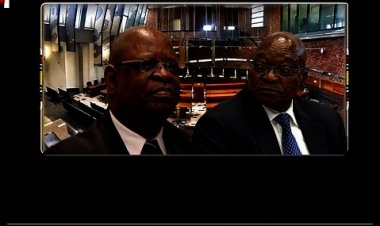
In 2021, South Africa’s Constitutional Court (Concourt) handed down an unprecedented ruling, sentencing former president Jacob Gedleyihlekisa Zuma to 15 months in prison for contempt of court—without the option of a fine. The decision was framed as a demonstration that no one is above the law, yet ironically, it required treating Zuma differently from other past political figures to achieve that very message.
As we reflect on this case in 2025, it is worth revisiting the legal and political contradictions that defined it. Did the judiciary strengthen the rule of law or undermine its own legitimacy in the process?
The Legal Dilemma: A Judiciary Bending the Rules to Protect Them?
The majority ruling in Zuma’s case justified its decision by emphasizing the extraordinary nature of his defiance. Zuma had repeatedly refused to appear before the Zondo Commission, which was investigating allegations of state capture during his presidency. The court argued that such defiance posed a direct threat to the judiciary's authority, necessitating a response that sent a strong message.
Yet, the minority ruling within the Concourt warned against setting a dangerous precedent, questioning the constitutionality of imposing a custodial sentence in civil contempt proceedings. The dissenting justices argued that the ruling violated established legal principles, effectively allowing the judiciary to act beyond its lawful authority.
This led to a striking paradox: to uphold the law, the court had to bend legal norms. But in doing so, did it reinforce the rule of law—or erode public trust in judicial impartiality?
A Media Narrative of Judicial Overreach
Mainstream media outlets such as Daily Maverick (DM) supported the Concourt’s decision, framing it as a necessary step to defend the integrity of South Africa’s legal system. DM posed the following question:
“Should a court ever be entitled, in civil contempt proceedings, to sentence an individual to a mandatory jail sentence if that individual resolutely refuses to obey a court order as part of a deliberate and coordinated all-out assault on the legitimacy and authority of that court, the legal system, and the rule of law?”
DM’s answer was a resounding yes, arguing that the court had to exercise extreme measures to safeguard the Constitution. The media outlet went so far as to dismiss the minority ruling, claiming that the dissenting justices failed to recognize the severity of the threat posed by Zuma’s defiance.
However, this logic raised serious concerns: is it acceptable to violate legal principles in the name of protecting them? If the courts could set aside due process in this case, what prevents them from doing so in others?
Judicial Entrapment? The Question of Fairness
Zuma’s refusal to appear before the State Capture Commission (Zondo Commission) was the immediate trigger for his contempt conviction. He had repeatedly insisted that Deputy Chief Justice Raymond Zondo was biased and should recuse himself from the case.
Despite knowing that Zuma was unlikely to comply, the Concourt allowed the Zondo Commission direct access to the apex court—bypassing lower courts—on the grounds of urgency. This move, critics argue, effectively set a legal trap for Zuma.
Once the Constitutional Court ensured that Zuma would defy the ruling, it proceeded to convict him of contempt and imposed a sentence that was unprecedented in South African history. The ruling left many questioning whether Zuma’s conviction was a result of due process—or an instance of judicial overreach.
Historical Comparisons: Different Treatment for Different Leaders?
In examining Zuma’s punishment, it is useful to compare it with how other political figures in South Africa’s history were treated when facing legal challenges:
- P.W. Botha, apartheid-era president and head of one of the most oppressive regimes in South African history, defied a subpoena from the Truth and Reconciliation Commission (TRC) in 1998. He was fined R10,000 (about £8,600) or sentenced to one year in prison, a ruling he successfully appealed and overturned.
- Lucas Mangope, former president of Bophuthatswana, was convicted of multiple counts of theft and fraud, yet his prison sentence was suspended, and he was merely fined.
These cases highlight the inconsistency in judicial responses to contempt and corruption. If Zuma was sentenced to 15 months of unsuspended imprisonment, why were Botha and Mangope granted leniency despite their violations of the law?
The answer seems to be political context. Zuma’s sentencing took place in a post-apartheid era, with the judiciary under intense pressure to reinforce its authority. In contrast, Botha’s case was handled at a time when political stability took priority over judicial retribution.
Revisiting the Consequences: Did the Judiciary Strengthen or Weaken Itself?
With the benefit of hindsight in 2025, what were the long-term effects of the Zuma ruling?
-
Erosion of Judicial Credibility
- Many South Africans lost trust in the Constitutional Court’s impartiality, viewing the ruling as a politically motivated decision rather than a neutral application of the law.
- The perception of double standards in the judiciary has fueled skepticism about its independence.
-
Precedent for Future Judicial Overreach
- The court’s willingness to create a special dispensation for Zuma’s case raises concerns that similar extraordinary measures could be used against other political figures in the future.
- The legitimacy of South Africa’s legal institutions has been undermined rather than strengthened.
-
Political Fallout
- The ruling contributed to heightened political tensions, as many of Zuma’s supporters saw it as evidence of a targeted attack on their leader.
- The decision sparked violent protests, highlighting deep divisions within the country.
Final Thought: Was Justice Served, or Was It Weaponized?
Zuma’s case set a legal precedent that remains controversial in 2025. While the principle of accountability remains essential, the means by which it was enforced raised troubling questions about judicial fairness.
If justice is blind, then it must be applied consistently—not selectively. Otherwise, the legal system risks becoming an instrument of political retribution rather than a guardian of impartiality.
As South Africa moves forward, the challenge remains: how can the rule of law be upheld without compromising its integrity in the process?